
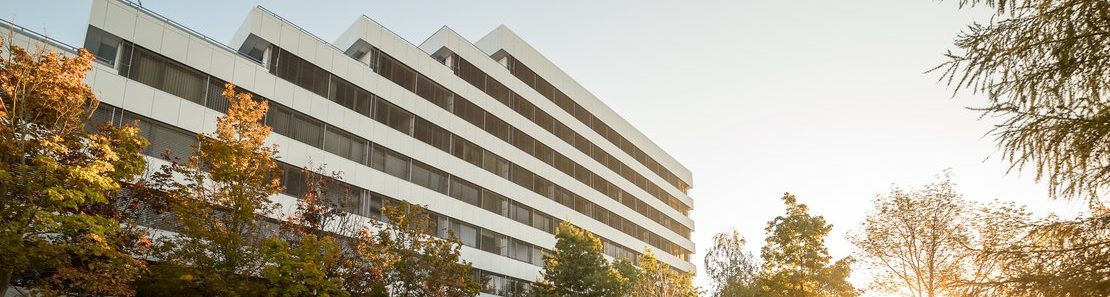
The Institute of Nuclear and Physical Engineering of the Faculty of Electrical Engineering and Information Technology, STU, provides education for students who are interested in nuclear energy and physical engineering.
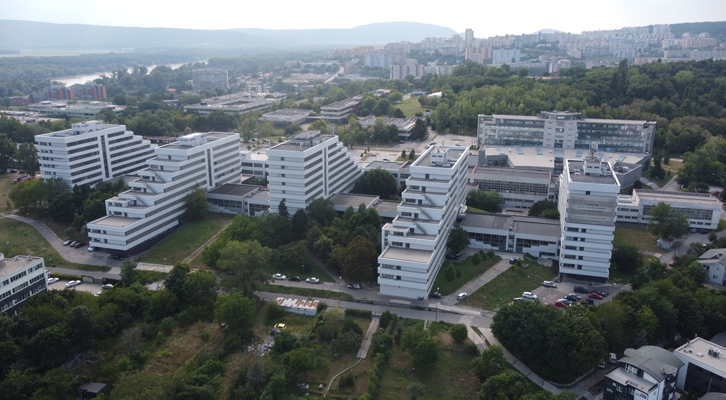
The institute focuses on research and development of applications in the fields of nuclear energy and materials research. We aim to prepare students who, after completing their studies, will be able to work in various sectors of nuclear engineering and development, such as nuclear power generation, nuclear power plant operational safety, or the design of modern nuclear facilities. Graduates will also be capable of investigating new processes in materials and seeking innovative possibilities for their application.
Teaching of specialized courses and research in the relevant fields are provided by the following departments:
- Department of Physics
- Department of Materials Research and Diagnostics
- Department of Nuclear Technology and Energy
- Department of Ionizing Radiation Applications
WHAT THEY SAY ABOUT US
What I always liked about studying Nuclear and Physical Engineering were the opportunities—meetings with potential employers, internships, courses, excursions, lectures by experts, as well as informal activities that help bring classmates together. If you’re motivated, you have the chance to gain a truly unique educational experience here.
Ing. Sofia Gašparová
I really enjoyed studying Physical Engineering. Physics and mathematics have interested me since childhood, and here I found a place where I could fully develop that interest. Thanks to my contact with people at the institute, I became familiar with many modern and fascinating technical and physical disciplines that motivated my further direction. Motivated students have many opportunities here to become involved in scientific research and to build a deeper understanding of the technical sciences.
Ing. Roman Michelko
What makes studying at INPE excellent is that students are truly valued here. You can feel it in the teachers’ approach to us—whether they encourage us to get involved in research or are willing to spend hours discussing interesting topics in physics. Overall, there is a more personal and friendly atmosphere here than I have experienced at other universities. Students who are willing to learn and are motivated will find plenty of opportunities to progress and fully pursue their interests.
Marko Timotej Mesík
Studying at INPE was not easy, but it was my gateway to a job that I enjoy and that has real meaning. I work for Slovenské elektrárne as the Head of a Reactor Unit at the Mochovce Nuclear Power Plant.
Ing. Martin Jesenič
After successfully completing my master’s studies, I enrolled in a PhD programme, where I continued my work focused on advanced materials for a new generation of nuclear reactors. During these three years, I completed a four-month internship in the USA and attended many conferences in Japan, India, and across Europe. My supervisor always supported me and helped me in all aspects of my studies. I am currently working at Reaktortest s.r.o. on the completion of Units 3 and 4 at the Mochovce Nuclear Power Plant. I was pleasantly surprised that even here in Mochovce, our professors are well known and highly praised. Studying at INPE was a very positive experience, and I certainly do not regret it. I highly recommend it :).
Ing. Iveta Bartošová, PhD.
Studying at INPE helped me grow both personally and professionally. In addition to knowledge and a passion for technology, my studies also developed my analytical thinking, which I use when solving problems in everyday practice. Courses taught by leading Slovak experts in their fields, with a human yet highly professional approach, motivated me to achieve better results not only during my studies but continue to inspire me even today.
Expert lectures, practical exercises and internships, international and domestic conferences, opportunities to study abroad, and participation in international research projects focused on future technologies convinced me already during my studies that I had chosen the right specialization. The Nuclear Energy study programme is designed to prepare graduates for real-world professional requirements while also offering opportunities for scientific careers. After completing my master’s studies at INPE, I chose to gain practical experience abroad (Sweden, Finland) at AREVA, where I am involved in projects in the field of nuclear energy.
Ing. Miloš Bajan
When deciding where to study at university, I had a single criterion—programmes focused on nuclear energy. I chose to study at the Slovak University of Technology, and with hindsight I can say that I made the right decision. Studying at the Institute of Nuclear and Physical Engineering of the Faculty of Electrical Engineering and Information Technology prepared me for the start of my professional career not only theoretically, but also practically.
The Nuclear Energy specialization is structured so that the theory taught by top professors in courses such as Nuclear Power Plant Operation, Nuclear Reactor Theory, Nuclear Power Plant Materials, and other specialized subjects does not remain purely theoretical, but is also applied in practice. We completed several professional excursions and multi-day practical training sessions at educational and research reactors in Vienna, Prague, and Budapest. During my master’s studies, I also had the opportunity to participate in the Chernobyl Scientific Expedition and to visit the European Organization for Nuclear Research (CERN) as part of the very successful Physics on Wheels project.
After successfully completing my master’s studies, I joined VUJE, a.s., where I had already been gaining valuable knowledge and guidance from my academic supervisor during my studies, which helped me in preparing my bachelor’s and master’s theses. I use the knowledge acquired during my studies at the Institute of Nuclear and Physical Engineering on a daily basis when solving research tasks and working on European projects.
Ing. Slavomír Bebjak, PhD.
Shortly after finishing high school, nuclear energy seemed to me a very interesting, prestigious, and at the same time highly complex field, and with almost childlike curiosity I wanted to learn as much as possible about how nuclear power plants operate. For this reason, after the general first year at FEI STU, I chose the bachelor’s programme in Nuclear Energy at the Institute of Nuclear and Physical Engineering.
During my bachelor’s and master’s studies at INPE, I focused on radiation damage to nuclear reactor materials. This was a typical interdisciplinary topic that required a solid mastery of nuclear physics, materials technology, and nuclear reactor operation. A comprehensive understanding of the embrittlement of reactor pressure vessel materials fascinated me so much that after completing my master’s degree, I decided to continue working on this topic and further develop my knowledge and skills at the PhD level.
During my PhD studies, I participated in several prestigious international conferences, published a number of impact-factor papers in international peer-reviewed journals, contributed to several research projects, and completed a scientific internship at a top-tier research institution—the Helmholtz Center in Rossendorf near Dresden. I was also part of the Scientific and Technical Team of the Year 2014, which received the Award for Science and Technology from the Ministry of Education.
After completing my doctoral studies, I took a position as a project manager at the international company Amec Foster Wheeler. Its Slovak nuclear division in Trnava focuses on the decommissioning of nuclear facilities, various decontamination activities, and the processing of radioactive waste. In my daily work, I continuously apply the knowledge and skills I acquired throughout all levels of my nuclear energy studies at INPE.
At present, I am most actively involved in projects related to the decommissioning of the V1 Nuclear Power Plant in Jaslovské Bohunice, where the second phase of decommissioning is currently underway, involving the decontamination and dismantling of primary (highly radioactive) nuclear power plant equipment. Finally, I would like to add that, in addition to myself, a significant portion of the middle—and even senior—management at Amec Foster Wheeler consists of former INPE graduates from various generations.